Yellow: A Playful Typeface for Kid-Centric Creativity
Finding a typeface that captures genuine joy without sacrificing usability is a rare feat. Most designers have experienced the frustration of scrolling through endless libraries of standard serif and sans serif fonts, only to find that the "fun" options look cheap or unreadable. When your target audience is children, or even the parents of children, the typography needs to do more than just sit there; it needs to smile. That is exactly where the Yellow font steps in. It is not just another display font; it is a specific tool designed to evoke the warmth and curiosity of childhood.
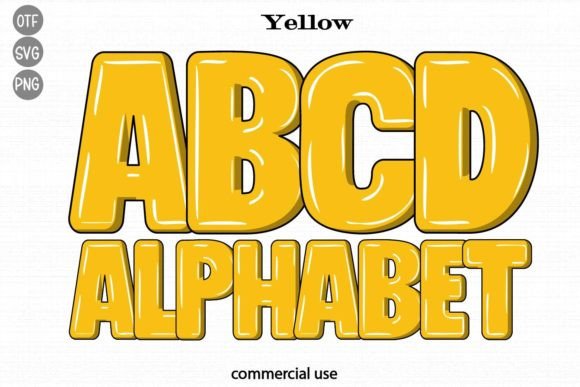
Yellow distinguishes itself immediately through its color and form. While many typefaces rely on black or grey to establish authority, this font leans into a warm, sunny yellow that feels optimistic and energetic. Visually, it balances a playful, handwritten aesthetic with the structure needed to remain legible. It avoids the trap of being overly "scrawly," which can be a nightmare to read on packaging or mobile screens. Instead, it offers a rounded, soft geometry that mimics the way children view the world—safe, inviting, and full of potential. If you are working on a project that needs to radiate positivity, this font provides that foundation instantly.
Bringing Brands to Life in the Youth Market
For small business owners and entrepreneurs breaking into the children’s market, brand identity is everything. You are competing for the attention of both the child and the parent. A parent looks for professionalism and safety, while a child looks for fun. Yellow bridges this gap. Imagine a logo for a new line of organic baby snacks or a local daycare center. Using a stiff, corporate sans serif font might look professional to the adult, but it fails to connect with the child. Conversely, a font that is too chaotic might turn away a parent looking for a trustworthy service.
Yellow works beautifully in logo design because it establishes an immediate emotional connection. It suggests that your brand is approachable, creative, and user-friendly. Beyond the logo, this typeface is a powerhouse for packaging design. Think about the shelf presence of a toy box or a book cover. The yellow hue pops against standard cardboard browns and colorful illustrations. It draws the eye without clashing with the artwork. When used on physical merchandise, such as t-shirts, tote bags, or stickers, the font retains its charm, turning a simple product into a piece of branded art that kids actually want to use.
Digital Applications and Social Media Strategy
In the digital realm, the Yellow font serves as a vital asset for content creators and marketers. Social media is a crowded space, and standard typography often gets scrolled past. If you are managing a parenting blog, a children’s educational YouTube channel, or a boutique Etsy shop, your graphics need to stop the thumb. Yellow is incredibly effective for Instagram stories, Pinterest pins, and TikTok overlays. Its bright color creates high contrast against both light and dark backgrounds, ensuring your message is seen.
However, it is crucial to practice smart font pairing here. Because Yellow is a distinct display font with a strong personality, it should rarely be used for long body text. It is best utilized for headers, titles, and call-outs. For the body copy on your website or blog, pair it with a highly legible, neutral sans serif font like Open Sans or Roboto. This creates a hierarchy that guides the reader’s eye. The Yellow font grabs attention, and the neutral font delivers the detailed information. This combination maintains visual consistency across your digital assets while keeping the interface looking polished and professional.
Practical Advice for Implementation and Licensing
Before you integrate this typeface into your workflow, it is vital to review the specific styles included in the package. A high-quality premium font often comes with various weights or alternate characters. Check if there are bold versions for emphasis or italic versions for quotes. Understanding the full capability of the font allows you to be more versatile in your editorial design. For instance, you might use the standard weight for a poster headline and a bolder weight for a call-to-action button on a landing page.
There is also the matter of commercial licensing, a step many creatives overlook until it becomes a legal headache. If you are designing a digital product to sell, such as printable party invitations or educational worksheets, you must ensure your license covers the redistribution of the font file or its rasterized images in a commercial product. Most licenses allow you to use the font in a logo that a client pays for, but they might restrict you from selling the font file itself to others. Always read the End User License Agreement (EULA). It is a small administrative task that protects your business and ensures you are respecting the intellectual property of the type designer.
Testing is another non-negotiable step. Do not just look at the font in your design software; test it in the environment where it will live. If you are designing a website, preview it on a mobile phone. If you are designing a poster, print a draft on your home printer. Sometimes, a font that looks perfect on a high-resolution monitor loses its charm when printed on matte paper. Because Yellow relies on a specific color aesthetic, ensure that your printing method or screen calibration preserves that "sunny" quality. If you are printing in black and white, the font still needs to hold up based on its shape alone.
The Verdict on Creative Typography
Ultimately, typography is a silent ambassador for your brand. When you choose a font like Yellow, you are making a deliberate decision to be seen as friendly, vibrant, and modern. It is a typeface that does the heavy lifting of emotional communication, allowing you to focus on your message. Whether you are a hobbyist scrapbooking your family memories or a marketing professional launching a global campaign for a new toy, this font offers a blend of whimsy and utility that is hard to find in standard type libraries. It proves that functional design doesn't have to be boring, and that a little bit of yellow can go a long way in making your project feel like sunshine.